
Home

Sebastian (Sebas) Aparicio, Ph.D.


Associate Professor (Agregat) Serra Hunter Fellow, Department of Business

Research Fellow, CREIS & CIEU

Universitat Autònoma de Barcelona

ABOUT


Currently I am an Associate Professor (Agregat) Serra Hunter Fellow in the Department of Business at Universitat Autònoma de Barcelona (UAB). In addition, I am affiliated as a Research Fellow in the Centre for Entrepreneurship and Social Innovation Research (CREIS-UAB) and Centre for University Entrepreneurship (Centre d’Iniciatives Emprenedores Universitàries CIEU-UAB–); and as a Junior Research Fellow in the Institute for Development Strategies at the School of Public and Environmental Affairs (IDS-SPEA, Indiana University). I participate in different research and consulting projects at UAB (e.g. GUESSS-UAB - Global University Entrepreneurial Spirit Students' Survey), and Fundación ECSIM Centro de Estudios en Economía Sistémica. I act as a Country Vice-President for Spain at the European Council for Small Business and Entrepreneurship (ECSB). I also sit on the Editorial Board of the journals Entrepreneurship Theory and Practice, Small Business Economics, and Entrepreneurship Research Journal, among others. I am also the Research Seminars coordinator at the Department of Business, and the Vice-Coordinator of the Master in Applied Research in Economics and Business  (MAREB-UAB).

I received a degree in Economics from Universidad de Antioquia, a M.Sc. in Economics from Universidad EAFIT, a M.Phil. in Applied Research in Economics & Business (MAREB), and a Ph.D. in Economics & Business (route Entrepreneurship & Management -IDEM-) from UAB. During my Ph.D. studies, I was Visiting Scholar in the IDS-SPEA at Indiana University.

I am mainly interested in the effects of entrepreneurial activity and innovation on economic growth and development under the institutional lenses. Some of my research has been published in various international journals such as Journal of World Business, Strategic Entrepreneurship Journal, Small Business Economics, and Entrepreneurship & Regional Development, among others.

Latest Featured News


(27/3/2024) CALL FOR CHAPTERS: INSTITUTIONS, INSTITUTIONAL CHANGE, AND ENTREPRENEURSHIP (with David Audretsch and David Urbano)


This Call-for-chapters invites scholars interested in the interface between institutions, institutional change, and entrepreneurship, to contribute to the book with literature reviews, empirical studies (either qualitative or quantitative), historical analyses, etc. Deadline: December 31st, 2024.

Further information.

(2/09/2025) FROM NOVICE TO SERIAL ENTREPRENEUR: HOW INSTITUTIONS INFLUENCE RELAUNCHING DECISIONS ON INTERNATIONAL CROWDFUNDING PLATFORM (with Ahmed Sewaid and Shaker Zahra)


We examine the relationship between formal institutions and entrepreneurs' campaign launching decisions, drawing on institutional economics and using data from 177,499 crowdfunding campaigns across developed and developing countries.


Get access.


(26/08/2025) THE RAISE OF THE CHANCER ENTREPRENEUR: INSTITUTIONS AND DIGITAL TECHNOLOGY FOR ENTREPRENEURSHIP IN UNCERTAIN TIMES (with Nicholas Litsardopoulos and George Saridakis)


Limited research explores how institutional support and digitalisation jointly shape entrepreneurial behaviour during crises. This study addresses that gap by asking: how do government support mechanisms and digital technologies influence entrepreneurship amid economic disruption? Drawing on institutional economics and technology affordance theories, we focus on chancer entrepreneurs—individuals who leverage government aid and digital tools to navigate uncertainty and seize business opportunities.


Get access.


(09/07/2025) MANAGING DESTRUCTIVE ENTREPRENEURSHIP IN PLACE: FORMAL AND INFORMAL INSTITUTIONS FOR THE ACHIEVEMENT OF REGIONAL ECONOMIC GROWTH (with Diego Martinez-Moya, Juan Carlos Muñoz-Mora, and David Urbano)


This study explores how institutions condition destructive entrepreneurial activity, which is linked to the economic growth of Colombian regions.


Get access.


"What will ever be remembered was his now century old emphasis on entrepreneurial innovation as a cardinal catalyst for economic progress". About Schumpeter in 'The Harvard-Circle', By P. Samuelson (2015: 34).

Refereed Journal Publications:


[39] Perez, J. P., Martins, I., Aparicio, S., Lopez, T., & Urbano, D. (2026). Crafting individual entrepreneurial orientation through education and institutions: Evidence from efficiency and innovation-driven economies. The International Journal of Management Education.

https://doi.org/10.1016/j.ijme.2025.101328


[38] Sewaid, A., Zahra, S. A., & Aparicio, S. (2026). From novice to serial entrepreneur: How institutions influence relaunching decisions on international crowdfunding platforms. Technovation, 149, 103355.


[37] Aparicio, S., Litsardopoulos, N, & Saridakis, G. (2025). The rise of the chancer entrepreneur: Institutions and digital technology for entrepreneurship in uncertain times. Technovation, 148, 103346.


[36] Aparicio, S., Martinez-Moya, D., Muñoz-Mora, J. C., & Urbano, D. (2025). Managing destructive entrepreneurship in place: formal and informal institutions for the achievement of regional economic growth. Small Business Economics. In press, doi: https://doi.org/10.1007/s11187-025-01090-7


[35] Aparicio, S., Lengler, J., Aguzzoli, R., Sousa, C. M. P., Bennito, G. R. G., & Urbano, D. (2025). Unfair competition and export intensity of Latin American SMEs: The role of regulations. International Business Review, 34(4), 102463.


[34] Plata, G., Scott, S., & Aparicio, S. (2025). Fostering an environment for social entrepreneurship: a comparative analysis across economic development levels. Review of Managerial Science. In press, doi: https://doi.org/10.1007/s11846-025-00887-w


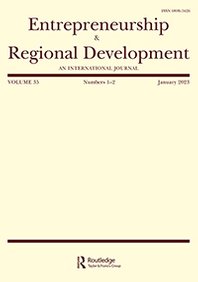
[33] Urbano, D., Aparicio, S., Muñoz-Mora, J. C., & Martinez-Moya, D. (2025). The spatial interplay between productive and destructive entrepreneurship: Do institutions meet expectations in rural areas? Entrepreneurship & Regional Development, 37(3-4), 350-374. Accepted Manuscript.


[32] Colson, M., Vandekerkhof, P., Marneffe, W., Schepers, J., & Aparicio, S. (2025). Moving beyond the negative effect of the regulation of entry: disentangling causality in new venture creation decisions. Journal of Regulatory Economics, 67(1-3), 61-90.


[31] Rodriguez-Vahos, A., Aparicio, S., & Urbano, D. (2025). Business Acceleration Program as City Sowers: Assessing Public Funding's Impact on New Ventures in an Emerging Economy. Journal of Entrepreneurship in Emerging Economies, 17(7), 97-126. Accepted Manuscript.


[30] Audretsch, D. B., Aparicio, S., Hughes, M., & Urbano, D. (2025). Linking entrepreneurship and society: solutions for today and tomorrow. International Journal of Entrepreneurial Behavior & Research. In press, doi: https://doi.org/10.1108/IJEBR-08-2024-0864. Accepted Manuscript.


[29] Aparicio, S., Klofsten, M., Noguera, M., & Urbano, D. (2024). Institutions, social entrepreneurship, and individual economic well-being: an exploratory study. Management Research, 22(4), 510-540. Doi: 10.1108/MRJIAM-10-2023-1472.


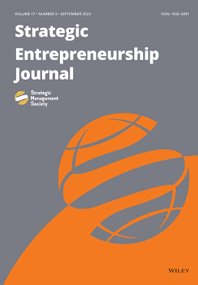
[28] Epure, M., Martin-Sanchez, V., Aparicio, S., & Urbano, D. (2024). Human Capital, Institutions, and Ambitious Entrepreneurship During Good Times and Two Crises. Strategic Entrepreneurship Journal, 18(2), 414-447. Doi: 10.1002/sej.1492. Accepted Manuscript.


[27] Urbano, D., Aparicio, S., Scott, S., & Martinez-Moya, D. (2024). Inside out: The interplay between institutions and digital technologies for SMEs performance. Entrepreneurship & Regional Development, 36(1-2), 162-181. Accepted Manuscript.


[26] Aparicio, S., Hughes, M., Audretsch, D., & Urbano, D. (2023). Incentivizing knowledge institutions for entrepreneurship and society. International Journal of Entrepreneurial Behavior & Research. In press, doi: https://doi.org/10.1108/IJEBR-07-2022-0652.


[25] Aparicio, S. & Montero, J. (2023). Selection of partners and the outcome of entrepreneurial teams: Should everything stay in the family? Bulletin of Economic Studies (Boletín de Estudios Económicos), 78(234), 93-114. In Spanish


[24] Aparicio, S., Audretsch, D., & Urbano, D. (2022). Governmental Support for Entrepreneurship in Spain: An Institutional Approach. Review of Public Economics/Hacienda Pública Española, 243(4), 29-49.


[23] Muñoz-Mora, J. C., Aparicio,S., Martinez-Moya, D., & Urbano, D. (2022). From immigrants to local entrepreneurs: Understanding the effects of migration on entrepreneurship in a highly informal country. International Journal of Entrepreneurial Behavior & Research, 28(9), 78-103.


[22] Aparicio. S., Audretsch, D., Noguera, M., & Urbano, D. (2022). Can female entrepreneurs boost social mobility in developing countries? An institutional analysis. Technological Forecasting and Social Change, 175, 121401.


[21] Plata, G., Aparicio, S., & Scott, S. (2021). The sum of its parts: Examining the institutional effects on entrepreneurial nodes in extensive innovation ecosystems. Industrial Marketing Management, 99, 136-152. Accepted Manuscript.


[20] Aparicio, S., Audretsch, D., & Urbano, D. (2021). Does entrepreneurship matter for inclusive growth? The role of social progress orientation. Entrepreneurship Research Journal 11(4), 20190308. Accepted Manuscript.


[19] Alwakid, W., Aparicio, S., & Urbano, D. (2021). The Influence of Green Entrepreneurship on Sustainable Development in Saudi Arabia: The Role of Formal Institutions. International Journal of Environmental Research and Public Health, 18(10), 5433.


[18] Urbano, D., Felix, C., & Aparicio, S. (2021). Informal institutions and leadership behavior in a developing country: A comparison between rural and urban areas. Journal of Business Research, 132, 544-556. Accepted Manuscript.


[17] Aparicio, S., Urbano, D., & Stenholm, P. (2021). Attracting the Entrepreneurial Potential: A Multilevel Institutional Approach. Technological Forecasting and Social Change, 168, 120748.


[16] Aparicio, S., Audretsch, D., & Urbano, D. (2021). Why is export-oriented entrepreneurship more prevalent in some countries than others? Contextual antecedents and economic consequences. Journal of World Business, 56(3), 101177. Accepted Manuscript.


[15] Aparicio, S., Turro, A., & Noguera, M. (2020). Entrepreneurship and Intrapreneurship in Social, Sustainable, and Economic Development: Opportunities and Challenges for Future Research. Sustainability, 12(21), 8958.


[14] Urbano, D., Turro, A., & Aparicio, S. (2020). Innovation through R&D activities in the European context: antecedents and consequences. The Journal of Technology Transfer 45(5), 1481-1504. Accepted Manuscript.


[13] Urbano, D., Audretsch, D., Aparicio, S., & Noguera, M. (2020). Does entrepreneurial activity matter for economic growth in developing countries? The role of the institutional environment. International Entrepreneurship and Management Journal, 16(3), 1065-1099. Accepted Manuscript.


[12] Alwakid, W., Aparicio, S., & Urbano, D. (2020). Cultural antecedents of green entrepreneurship in Saudi Arabia: An institutional approach. Sustainability, 12(9), 3673. Doi: 10.3390/su12093673.


[11] Urbano, D., Aparicio, S., & Audretsch, D. (2019). Twenty-five years of research on institutions, entrepreneurship, and economic growth: What has been learned? Small Business Economics, 53(1), 21-49Accepted Manuscript.


[10] Aparicio, S., Urbano, D., Audretsch, D., & Noguera, M. (2019). Female and male entrepreneurship during the economic crisis: An institutional tale of European countries. World Economy Review (Revista de Economía Mundial), 51, 163-184.


[9] Felix, C., Aparicio, S., & Urbano, D. (2019). Leadership as a driver of entrepreneurship: An international exploratory study. Journal of Small Business and Enterprise Development, 26(3), 397-420.


[8] Aparicio, S., Urbano, D., & Gomez, D. (2018). Entrepreneurship and regional economic growth in Antioquia: An empirical analysis. Economics and Business Letters, 7 (2), 84-91.


[7] Urbano, D., Aparicio, S., Guerrero, M., Noguera, M., & Torrent-Sellens, J. (2017). Institutional determinants of student employer entrepreneurs at Catalan universities. Technological Forecasting and Social Change, 123, 271-282. Accepted Manuscript.


[6] Urbano, D., Aparicio, S., & Querol, V. (2016). Social progress orientation and innovative entrepreneurship: An international analysis. Journal of Evolutionary Economics, 26(5), 1033-1066Accepted Manuscript.


[5] Aparicio, S., Urbano, D., & Gómez, D. (2016). The role of innovative entrepreneurship within Colombian business cycle scenarios: A system dynamics approach. Futures, 81, 130-147Accepted Manuscript.


[4] Aparicio, S., Urbano, D., & Audretsch, D. (2016). Institutional factors, opportunity entrepreneurship and economic growth: Panel data evidence. Technological Forecasting and Social Change, 102, 45-61Accepted Manuscript.


[3] Urbano, D., & Aparicio, S. (2016). Entrepreneurship capital types and economic growth: International evidence. Technological Forecasting and Social Change, 102, 34-44Accepted Manuscript.


[2] Aparicio, S., Ramírez Hassan, A., & Gómez, D. F. (2013). Selecting occupations to create jobs using discrete choice models: Medellin Metropolitan Area 2009. Estudios Gerenciales Journal of Management and Economics for Iberoamerica, 29(129), 476-484. In Spanish.


[1] Muñoz-Mora, J. C., Aparicio, S., & Mesa, M. (2011). Is the economy a game? Experimental classroom evidence for an introduction to economics course. Ecos de Economía: A Latin American Journal of Applied Economics, 15(33), 185-207. In Spanish.


Books:


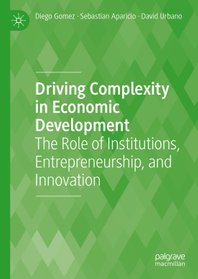
[6] Gomez, D., Aparicio, S., & Urbano, D. (2023). Driving Complexity in Economic Development: The Role of Institutions, Entrepreneurship, and Innovation. Cham: Palgrave Macmillan.


[5] Aparicio, S., Turro, A., & Noguera, M. (Eds.) (2021). Entrepreneurship and Intrapreneurship in Social, Sustainable, and Economic Development. Basel: Switzerland, MDPI Books.


[4] Urbano, D., Aparicio, S., & Audretsch, D. B. (2019). Institutions, Entrepreneurship, and Economic Performance. Cham: Switzerland, Springer International Publishing.


[3] Gómez, D.F., Aparicio, S., Urbano, D., González, P.J., Jaramillo, C.H., Montoya, S.A., Montoya, G., Echeverry, J., Restrepo, J.H., Yepes, R., Escobar, J.D., Gallón, L., & Giraldo, J.E. (2015). Medellin's commitment (Una apuesta por Medellín). Medellín: Corporación Universitaria Remington. ISBN: 978-958-58644-1-2. In spanish.


[2] Alvarez, C., Yepes, M., Cano, J. A., Aparicio, S., Cortés, J.A., Holguín, A. M., Vélez, G., Pereira, F., Molina, T., Cano, C. A. & Olaya, A. (2013). Global Entrepreneurship Monitor (GEM). Annual Report Antioquia 2012. Medellín: Fundación ECSIM, ISBN: 978-958-97719-3-8. In Spanish.


[1] Gómez, D., Alvarez, C., Aparicio, S., Podestá, P., Bedoya, B. & Pereira, F. (2011). Global Entrepreneurship Monitor (GEM). Annual Report Medellin 2010. Medellín: Alcaldía de Medellín. In Spanish.


Book Chapters:


[10] Urbano D., Turro A., & Aparicio S. (2021) Antecedents and Consequences of Innovation via R&D in Europe. In: Guerrero M. & Urbano D. (eds), Technology Transfer and Entrepreneurial Innovations. International Studies in Entrepreneurship, vol 51. Springer, Cham. https://doi.org/10.1007/978-3-030-70022-5_7.


[9] Alwakid, W., Aparicio, S., & Urbano, D. (2021). Governmental Supportive Policies for Green Entrepreneurial Activity in Saudi Arabia: An Institutional Analysis. In: Faghih, N. & Samadi, A. H. (Eds.), Legal-Economic Institutions, Entrepreneurship, and Management: Perspectives on the Dynamics of Institutional Change from Emerging Markets. Cham, Springer. Accepted Manuscript.


[8] Aparicio, S., Turro, A., Noguera, M., & Urbano, D. (2021). From entrepreneurial intentions to entrepreneurial behavior: The role of institutional factors. In: Saiz-Álvarez, J. M., Olalla-Caballero, B. (Eds.), Quality Management for Competitive Advantage in Global Markets (pp. 110-135). Hershey: IGI Global. Accepted Manuscript.


[7] Aparicio, S. (2020). Bring your background up and keep the context in mind to choose the right conversation. In: Welter, F. & Urbano, D. (Eds.), How to Make your Doctoral Research Relevant. Insights and Strategies for the Modern Research Environment (pp. 11-12). London: Edward Elgar.


[6] Felix, C., Aparicio, S., & Urbano, D. (2020). Entrepreneurial leadership across countries: The role of informal institutions. In: Saiz-Álvarez, J. M., Leitão, J., & Palma-Ruiz, J. M. (Eds.), Entrepreneurship and Family Business Vitality. Surviving and Flourishing in the Long Term (pp. 67-83). Switzerland: Springer International Publishing. Accepted Manuscript.


[5] Urbano, D., & Aparicio, S. (2019). An Overview of the Economics of Entrepreneurship and Small Business: The Legacy of David Audretsch. In: Lehmann, E. E., & Keilbach, M. (Eds.), From Industrial Organization to Entrepreneurship. A Tribute to David B. Audretsch (pp. 279-306). Switzerland: Springer International Publishing.


[4] Aparicio, S., Felix, C., & Urbano, D. (2018). Informal Institutions and Leadership Behavior: A Cross-Country Analysis. In Göker, S. (Ed.), Leadership (pp. 41-60), London: IntechOpen.


[3] Urbano, D., Aparicio, S., & Noguera, M. (2018). Institutions, Gender, and Entrepreneurship in Latin America. In: Evolving Entrepreneurial Strategies for Self-Sustainability in Vulnerable American Communities. Ed: Luis Javier Sanchez-Barrios, Liyis Gomez-Nunez (pp. 19-41). Hershey: IGI Global. Accepted Manuscript.


[2] Urbano, D., Ferri, E., Peris-Ortiz, M, & Aparicio, S. (2017). Social Entrepreneurship and Institutional Factors: A Literature Review. In: Social Entrepreneurship in Non-Profit and Profit Sectors: Theoretical and Empirical Perspectives. Ed.: Marta Peris-Ortiz, Frédèric Teulon, Dominique Bonet-Fernandez (pp. 9-29). International Studies in Entrepreneurship (Vol. 36), Springer.


[1] Gómez, D., Aparicio, S., & Urbano, D. (2015). The influence of entrepreneurship capital on Antioquia economic growth. In: Medellin's commitment. Ed.: Diego Gómez et al. (pp. 17-43) ISBN: 978-958-58644-1-2. In Spanish.


Proceedings:


[8] Aparicio, S., Urbano, D., & Stenholm, P. (2019). Institutions in Attracting the Entrepreneurial Potential: A Multilevel Approach. Academy of Management Proceedings, 15408. Doi:

10.5465/AMBPP.2019.15408abstract.


[7] Urbano, D., Turro, A., & Aparicio, S. (2017). Antecedents and Consequences of Corporate Manufacturing Entrepreneurship via R&D. Academy of Management Proceedings. Doi: 10.5465/AMBPP.2017.16838abstract.


[6] Aparicio, S., Zuluaga, M., & Duque, S. (2013). Economic growth of Colombia and Antioquia. A look of key sectors through system dynamics. In: Proceedings of the 11th Latin American System Dynamics Conference. Ed. Gloria Pérez and Roberto Villaseñor. ISBN: 978-607-501-252-0. In Spanish.


[5] Aparicio, S., Zuluaga, M., & Duque, S. (2013). Antioquia economic growth simulations with system dynamics. In: The diversity's display and the unit of System Dynamics. Proceedings of the 11th Colombian System Dynamics Meeting. Ed.: Hugo Andrade. ISBN: 978-958-46-31596. In Spanish.


[4] Aparicio S., Yepes, R., & Giraldo, J. (2012). Divergent Development: A look under the related Science, Technology and Innovation, and sustainable development. In: Proceedings of the 3rd International Conference of Technology Management and Innovation, 2012: Competitiveness in the open markets. Ed.: Jorge Robledo, Alejandro Olaya, Alejandro Cuadros y Gabriel Awad, ISBN: 978-958-764-042-7. In Spanish.


[3] Yepes, R., Aparicio, S., & Ramírez, C. (2012). Externalization of R&D as practices of world class enterprises”. In: Proceedings of the 3rd International Conference of Technology Management and Innovation, 2012: Competitiveness in the open markets. Ed.: Jorge Robledo, Alejandro Olaya, Alejandro Cuadros y Gabriel Awad, ISBN: 978-958-764-042-7. In Spanish.


[2] Gómez, D., Aparicio, S. & Zuluaga, M. (2011). Evaluation of entrepreneurship policies such a solution of poverty in Medellín. A system dynamics approach. In: System Dynamics for the effective decision making and the strategic analysis of problems. Proceedings of the 8th Latin American System Dynamics Conference and 8th Colombian System Dynamics Meeting. Ed.: Sandra María López Muriel, ISBN: 978-958-696-874-4. In Spanish.


[1] Gómez, D. & Aparicio, S. (2011). Colombian economic growth simulations with system dynamics. In: System Dynamics for the effective decision making and the strategy analysis of problems. Proceedings of the 8th Latin American System Dynamics Conference and 8th Colombian System Dynamics Meeting. Ed.: Sandra María López Muriel, ISBN: 978-958-696-874-4. In Spanish.


Non-Refereed Publications (Transfer Activities):


[11] Epure, M., Martin-Sanchez, V., Aparicio, S., & Urbano, D. (2024). How Do Human Capital And Pro-Market Institutions Shape Ambitious Entrepreneurship In Good And Crisis Times? Strategic Management Explorer.


[10] Aparicio, S. (2020). The power of entrepreneurship. Impact Maganize No. 8, pp. 10-12, Durham University, UK.


[9] Aparicio, S. (2020). Can innovative entrepreneurs within firms help overcome the valley of death? Impact Magazine No. 7, pp. 20-21, Durham University, UK.


[8] Aparicio, S. (2019). Leadership and Entrepreneurship in a Turbulent World. Impact Magazine No. 5, pp. 6-7, Durham University, UK.


[7] Aparicio, S., & Yepes, R. (2011). Entrepreneurship: A factor to avoid or overcome crisis periods, and to generate development. El Informador, 366, 4. ISSN 2027-2715. In Spanish.


[6] Gómez, D. F. & Aparicio, S. (2010). Entrepreneurship and innovation: social and economic transformation keys. Revista Universidad Empresa Estado, 3(5), 63-65. In Spanish.


[5] Aparicio, S. (2009). The new economic geography. Oikos, 22. ISSN 0121-070x-22. In Spanish.


[4] Aparicio, S. (2008). The Metro-Dependency. El Punto Crítico, Economic Sciences Faculty Newspaper, June, Universidad de Antioquia.


[3] Aparicio, S., & Muñoz, Y. (2007). The economics of happiness. Oikos, 21. ISSN 0121-070x-22. In Spanish.


[2] “Raising the employment and pay of the working poor: Low-Wage Employment Subsidies versus the Welfare State” (original paper by Edmunds Phelps, spanish translation with Juan Diego Giraldo and Everto Pallares) (2007). Oikos, 21. In Spanish.


[1] Aparicio, S., & Vergara, R. (2006). Systemic economics. Oikos, 20. ISSN 0121-070x-22. In Spanish.


Policy Reports:


[5] Gómez, D., Echavarría, J. J., Giraldo, J. E., Aparicio, S., et al. (2015). Structuring a Municipal strategy to better use of Free Trade Agreement: Building a model to assess Antioquia's export success and internationalization. Cámara de Comercio de Medellín para Antioquia. In Spanish.


[4] Aparicio, S., Giraldo, J. E., Ramírez, C., & Ramírez, L. F. (2014). Conditioning factors of child labor in Bogota, Cali, Medellin, Barranquilla, Cartagena and Ibague. A quantitative and qualitative analysis. Documentos Fundación Telefónica. República de Colombia. In Spanish.


[3] Aparicio, S., Giraldo, J. E., Ramírez, C., & Ramírez, L. F. (2013). Intragroup analysis of child labor in Colombia: a pilot qualitative and quantitative exercise. Observatorio del Bienestar de la Niñez, 10, ICBF, República de Colombia. In Spanish.


[2] Vélez, L. G. et al. (2013). Analyzing the impact of regulation and productive structures and industrial electric power sector, at all stages of the production chain, the final level of the rates and prices of electricity service and international competitiveness in the Colombian economy. Documentos PTP. República de Colombia. In Spanish.


[1] Gómez, D., Giraldo, J., Aparicio, S., Ramírez, C. & Petro, M. (2010). Child Labour: School attendance versus children and youth employment in the main cities of Colombia. Road to poverty?. Bogotá D. C.: Fundación Telefónica. In Spanish.


Other Publications:


[1] Aparicio, S. (2010). Business creation and its effects on economic development: application of a system dynamics model for testing business promotion policies in Colombia. Thesis of undergraduate in Economics, Departamento de Economía, Facultad de Ciencias Económicas, Universidad de Antioquia. In Spanish.


"¿Profesor? ¿Cómo que profesor? Yo no soy maestro de nada, muchacho. Si quieres llamarme algo honroso, denomíname <<filósofo>>. Ya sabes que los filósofos nos dedicamos a la Filosofía, una hermosa palabra griega que quiere decir <<amor a Sofía>> o sea amor a la sabiduría." El gran laberinto, Fernando Savater... To my daughter, Sofi

New Venture Creation (UAB –Economics and Business)


Organization in SMEs (UAB –Labor Relations)


Entrepreneurship and Innovation (UAB –Tourism and Hotel Management)

How to build up a Canvas


Undergrad and Master final projects (UAB)


Networking for SMEs, Master MAREB (UAB)


Entrepreneurship, Master MUDOTE (UAB)


Entrepreneurship, Master MUGEH (UAB)


Entrepreneurship, Graduate Diploma in Ecotourism and Nature-Guide (UAB)


Previous modules:


  • Family Firms (UAB)

  • Human Resources (UAB)
  • The Entrepreneurs Environment (DUBS)
  • New Venture Creation (DUBS)
  • Small Business Management (DUBS)
  • Principles of Entrepreneurship: Institutional context and entrepreneurial activity, Master (U Seville)
  • Entrepreneurship (UCCManresa)
  • Principles of Economics (U. EAFIT)
  • General Microeconomics (U. EAFIT)
  • Science, technology, innovation and entrepreneurship (U. de M.)


"Todo Colombiano a los 40 años es un empresario en potencia", Juan Luis Londoño (2002).

Projects and consulting:


"Meaningful learning as cognitive and attitudinal transformation: open educational resources, experimentation and learning challenges for proactive participation in university and throughout life." AMD_2025_01. Funded by Faculty of Economics and Business Studies, Universitat Autònoma de Barcelona. Funding: 1,000 Euros. Principal Researchers: G. Lamberti and S. Aparicio, 2025-2026


"Institutional and organizational determinants of international entrepreneurship in a digital and sustainable context". PID2022-141777NB-I00. Funded by Ministerio Español de Ciencia e Innovación. Funding: 84,600 Euros. Principal Researchers: D. Urbano, 2023-2027


"HEI Capacity Building Initiative: Boosting Innovation and Entrepreneurship through European Universities". 21585-A2115. Funded by the European Institute of Innovation and Technology and the European Union. Funding: 1,200,000 Euros. Project partners: University of Trento –project lead; Trentino Innovation Hub – Foundation; Link¨oping University; University of Stavanger; Kaunas University of Technology; and National Institute of Applied Sciences of Toulouse. Principal Researcher at UAB: A. Turro. 2021-2023


"Developing an International Entrepreneurship Behaviour on Brazilian new ventures and SMEs". Funded by SIMECS (Brazil) and Durham University ESRC Impact Acceleration (UK). Funding: £19,000. Research Team: Jorge Lengler, Sebastian Aparicio, Roberta Aguzzoli, Carlos Sousa. 2020-2021.


"Dynamic capabilities and institutions as determinants of international entrepreneurship". Universitat Autònoma de Barcelona, ECO2017-87885-P, Principal Researchers: D. Urbano. Funded by the Spanish Ministry of Economy & Competitiveness. 2018-2021.


"Historical roots of conflict and development: From the prehistory to the colonization experience". Universitat Pompeu Fabra, EC-H2020-HISTROOTS, Principal Researcher: M. Reynal. Funded by The European Commission. 2016 -2017.


“Determining factors of international entrepreneurship: institutions, organizational capabilities, and networks". Universitat Autònoma de Barcelona, ECO2013-44027-P, Principal Researchers: D. Urbano. Funded by Spanish Ministry of Economy & Competitiveness. 2014 -2017.


"Structuring a Municipal strategy to better use of Free Trade Agreement: Building a model to assess Antioquia's export success and internationalization". Funded by Cámara de Comercio de Medellín para Antioquia. 2015.


"Conditioning factors of child labor in Bogota, Cali, Medellin, Barranquilla, Cartagena and Ibague. A quantitative and qualitative analysis". Funded by Fundacion Telefonica 2013-2014.


"Monitoring and analyzing of EPM's Financing Program for Small firms. Funded by Empresas Públicas de Medellin". 2013-2014.


"Updating legal and economic impact of 'labor collective convention' of Empopasto S.A. E.S.P and its workers union". Funded by Empopasto S.A. E.S.P. 2013.


“Analyzing the impact of regulation and productive structures and industrial electric power sector, at all stages of the production chain, the final level of the rates and prices of electricity service and international competitiveness in Colombian economy”. Funded by Programa de Transformación Productiva (PTP) - Bancoldex. 2013.


"Reviewing and restructuring descriptive statistics on a report entitled 'intellectual properties on Colombian universities and enterprises 2010-2011'". Funded by Corporacion Tecnnova. 2013.


“Global Entrepreneurship Monitor (GEM) Antioquia Annual Report 2012”. Funded by Gobernación de Antioquia. 2012.


“Restructuring and updating of development´s social management model for Antioquia”. Funded by Cámara de Comercio de Medellín para Antioquia. 2012.


“Intragroup analysis of child labor in Colombia: a pilot qualitative and quantitative exercise”. Funded by Fundación Telefónica. 2012.


“Determinants of a set of Intellectual Property Indicators (IPI)”. Funded by Corporación Tecnnova. 2012.


“Dynamic Model with Modular structure of the Colombian Economy under System Dynamics and Geographic Information Interface”. Funded by Colciencias. 2011-2012.


“Dynamic simulation models for decision making in the business of energy, water and telecommunications”. Funded by Empresas Públicas de Medellín. 2009-2011.


“Analysis and dynamic simulation of industry clusters in Medellin-Colombia”. Funded by Cámara de Comercio de Medellín para Antioquia. 2010-2011.


“Child Labour: School attendance versus children and youth employment in the main cities of Colombia. Is it a road to poverty?” Funded by Fundación Telefónica. 2010.


“Metropolitan Competitiveness”. Funded by Área Metropolitana y Cámara de Comercio de Medellín para Antioquia. 2010.


“Impact on capital formation of social interests”. Funded by Empresas Públicas de Medellín. 2008. “Updated, adjustment and modification of micro-world for policy planning for social intervention in the Medellin neighborhoods as a tool to support the formulation of the development plan 20082011. An application of systemic economics' models based on system dynamics”. Funded by Municipio de Medellín. 2008.


“A general model of the Colombian economy and 15 productive sectors: An application of systemic economics' models based on system dynamics”. Funded by Compañía Suramericana de Seguros. 2008.


Contact information:


Universitat Autònoma de Barcelona Department of Business

Edifici B, Campus UAB, 08193, Cerdanyola del Vallès (Barcelona), Spain.